What is bacteriostatic water?
- WilliamDylan
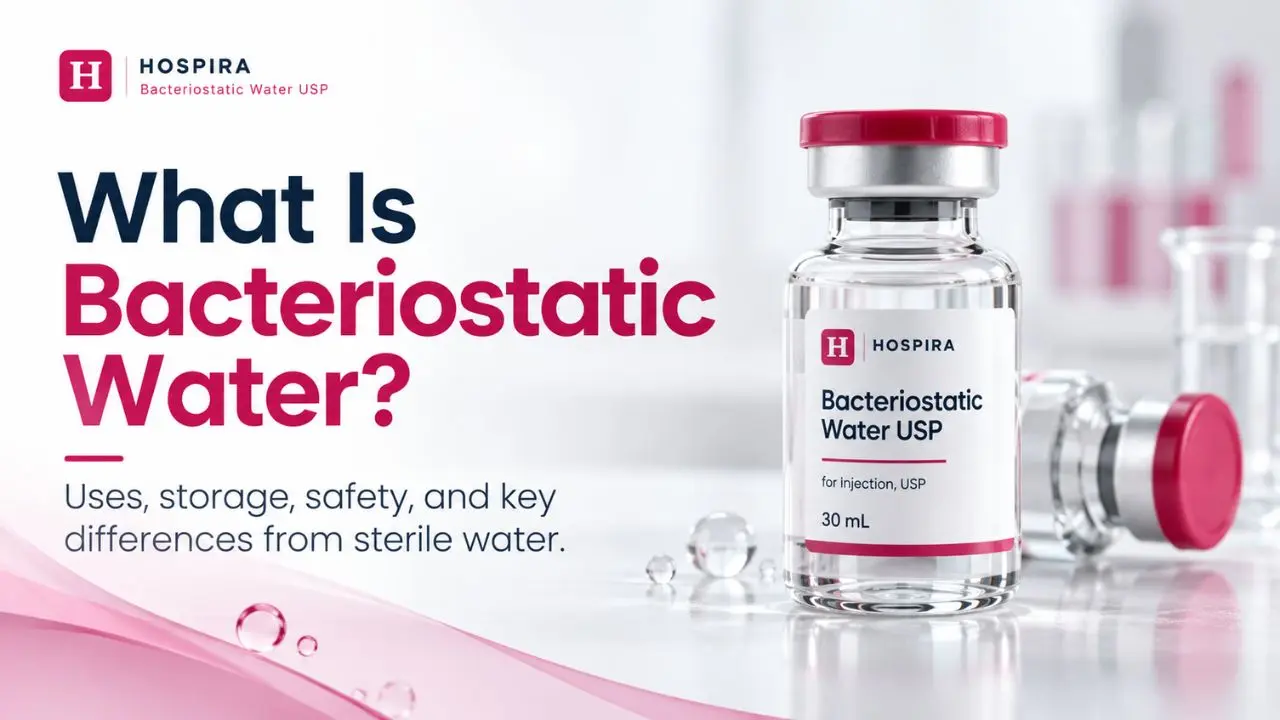
Bacteriostatic water contains a preservative agent called benzyl alcohol. This helps inhibit bacterial contamination after opening the vial. Bacteriostatic water is often used as a diluent for various injectable medicines and compounds. Unlike sterile water, bacteriostatic water has a specific purpose. In this blog, we will explore its uses, storage, safety, and key differences from sterile water.
Shop Hospira Bac Water

$2,499.00 Original price was: $2,499.00.$2,049.00Current price is: $2,049.00.

$724.75 Original price was: $724.75.$399.99Current price is: $399.99.

$289.90 Original price was: $289.90.$199.99Current price is: $199.99.

$144.95 Original price was: $144.95.$109.95Current price is: $109.95.
What Is Bacteriostatic Water Used For?
The main function of bacteriostatic water is to serve as a sterile vehicle for certain injectable preparations. Bacteriostatic water is used to prepare solutions from certain pharmaceutical products. This product is used in the clinical field or in pharmaceutical practice for specific purposes. Benzyl alcohol inhibits bacterial growth and allows reuse of the vial under aseptic conditions. Nevertheless, the use of bacteriostatic water depends on the specific pharmaceutical product.
How Does Bacteriostatic Water Work?
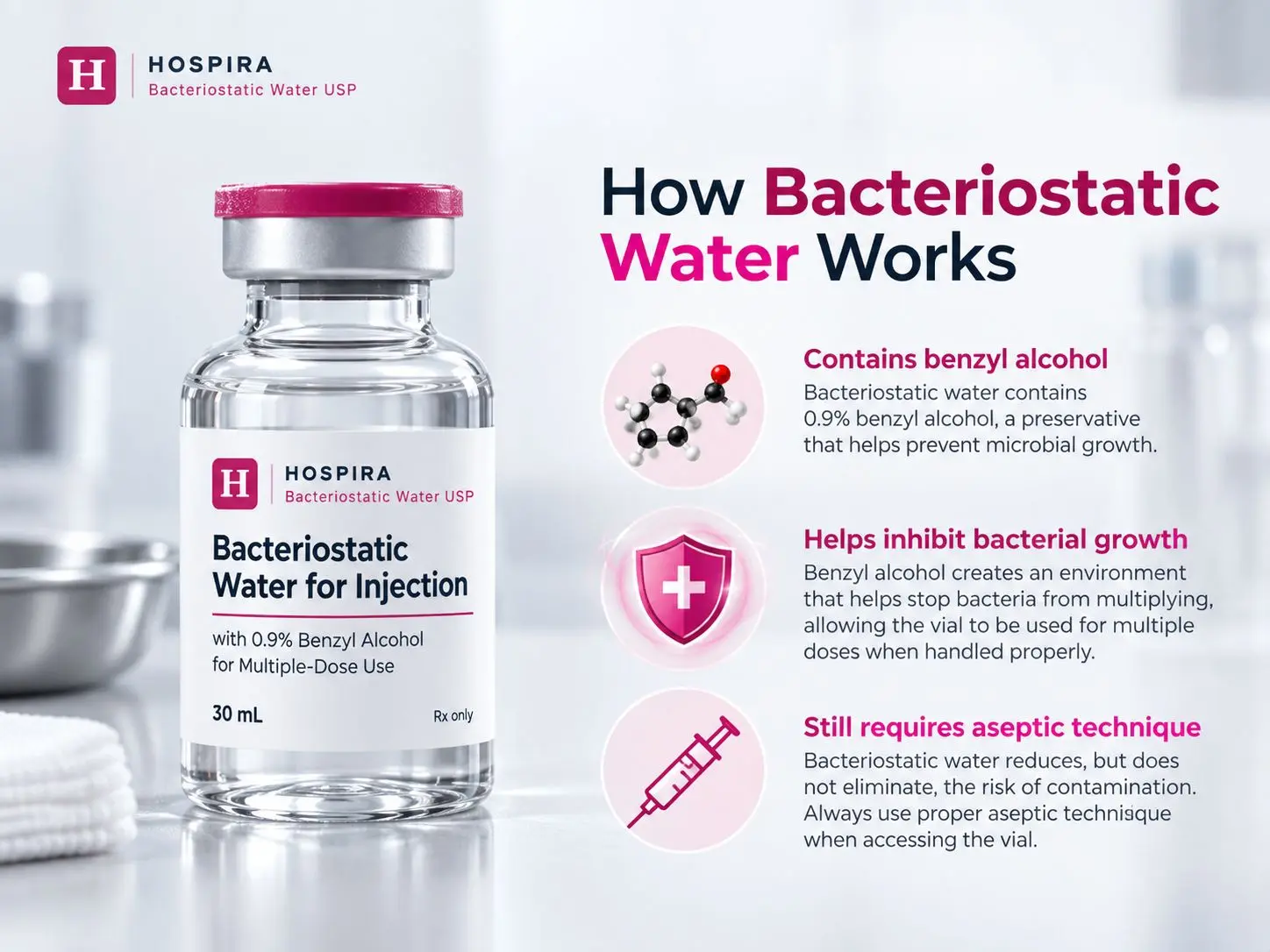
Bacteriostatic water works by incorporating benzyl alcohol as a preservative, which helps inhibit bacterial growth. Preservatives are added to the solution to ensure stability even after opening the vial. Thus, bacteriostatic water is different from sterile water without any preservative. “Bacteriostatic” does not mean the water has no bacteria or microorganisms; it means the formula prevents bacterial growth under the right conditions. Use proper aseptic technique whenever you access the vial. Clean equipment, avoid contact with the stopper, and follow the manufacturer’s storage recommendations to reduce contamination risk.
Important: The preservative in bacteriostatic water helps inhibit bacterial growth but does not make the vial immune to contamination. Proper aseptic technique is still required every time the vial is accessed.
Bacteriostatic Water vs Sterile Water
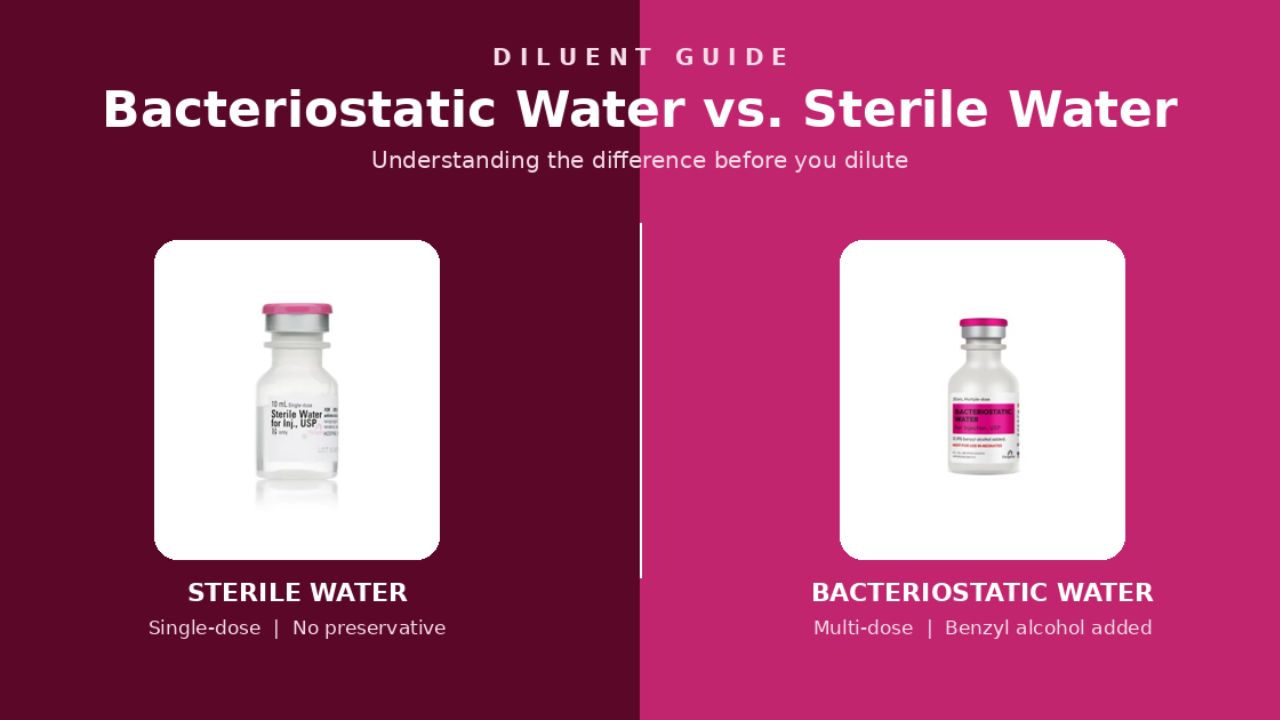
Bacteriostatic water and sterile water are both used as diluents, but their formulations and intended uses differ. The main difference is that bacteriostatic water contains a preservative, while sterile water does not.
| Feature | Bacteriostatic Water for Injection | Sterile Water for Injection |
|---|---|---|
| Preservative | Contains benzyl alcohol | Preservative-free |
| Container | Multi-dose | Typically single-dose |
| Intended use | Diluent for injectable drugs when specified | Diluent for injectable drugs when specified |
| Repeated withdrawals | Intended for repeated withdrawals from a labeled multi-dose container | Not intended for repeated withdrawals |
| Key difference | Contains a bacteriostatic preservative | Does not contain a preservative |
For a more detailed comparison of formulation, preservatives, and typical use, see our guide to Bacteriostatic Water vs Sterile Water.
Bacteriostatic Water for Peptides
Another substance often mentioned with lyophilized peptides is bacteriostatic water. Lyophilized peptides normally come in dried form inside sealed vials. Reconstitution is the process of mixing an appropriate diluent with lyophilized peptides to form a solution. Using an appropriate diluent helps preserve the product’s desired stability and compatibility.
Before Using With Peptides: Not every peptide or injectable product is compatible with bacteriostatic water. Always check the specific product labeling or instructions to determine which diluent is appropriate.
Bacteriostatic water is sometimes used to reconstitute certain lyophilized peptides, but it is not suitable for every medication or peptide. The appropriate diluent depends on the specific product and its instructions. Always consult the product labeling or instructions before selecting a diluent. Follow the manufacturer’s guidelines for product storage and handling. This is because dosing and preparation requirements vary by product.
How Long Does Bacteriostatic Water Last?
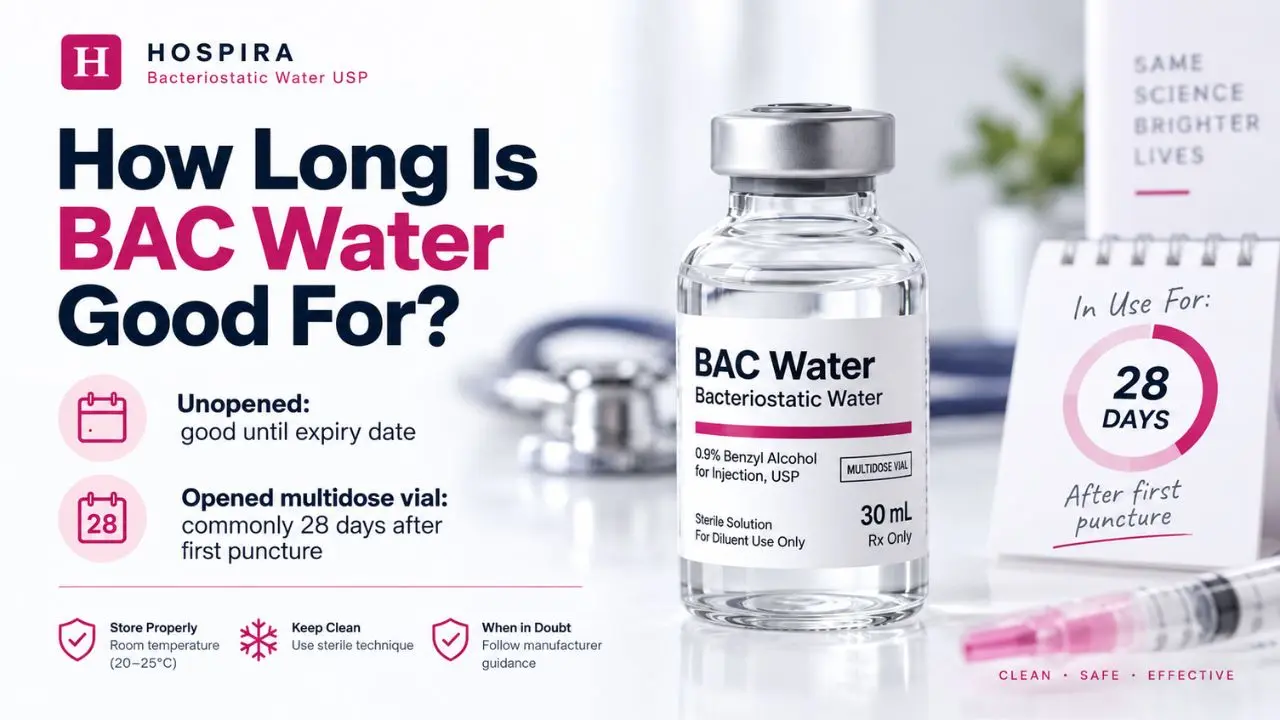
An unopened container of bacteriostatic water lasts as long as stated on its expiry date. But once you open the vial for the first time, maintaining sterility may be harder. For multidose vials, CDC/USP guidance generally recommends discarding the vial within 28 days after first puncture unless the manufacturer specifies a different opened-vial period (CDC – Injection Safety). Follow the manufacturer’s instructions, and do not extend the opened-vial period beyond the original expiration date. For more details, see How Long Is BAC Water Good For.
Important: A 28-day period is general guidance for multidose vials after first puncture and does not override the manufacturer’s instructions. Always follow the product-specific labeling.
How Should Bacteriostatic Water Be Stored?
Follow these storage guidelines to help maintain the quality and sterility of bacteriostatic water.
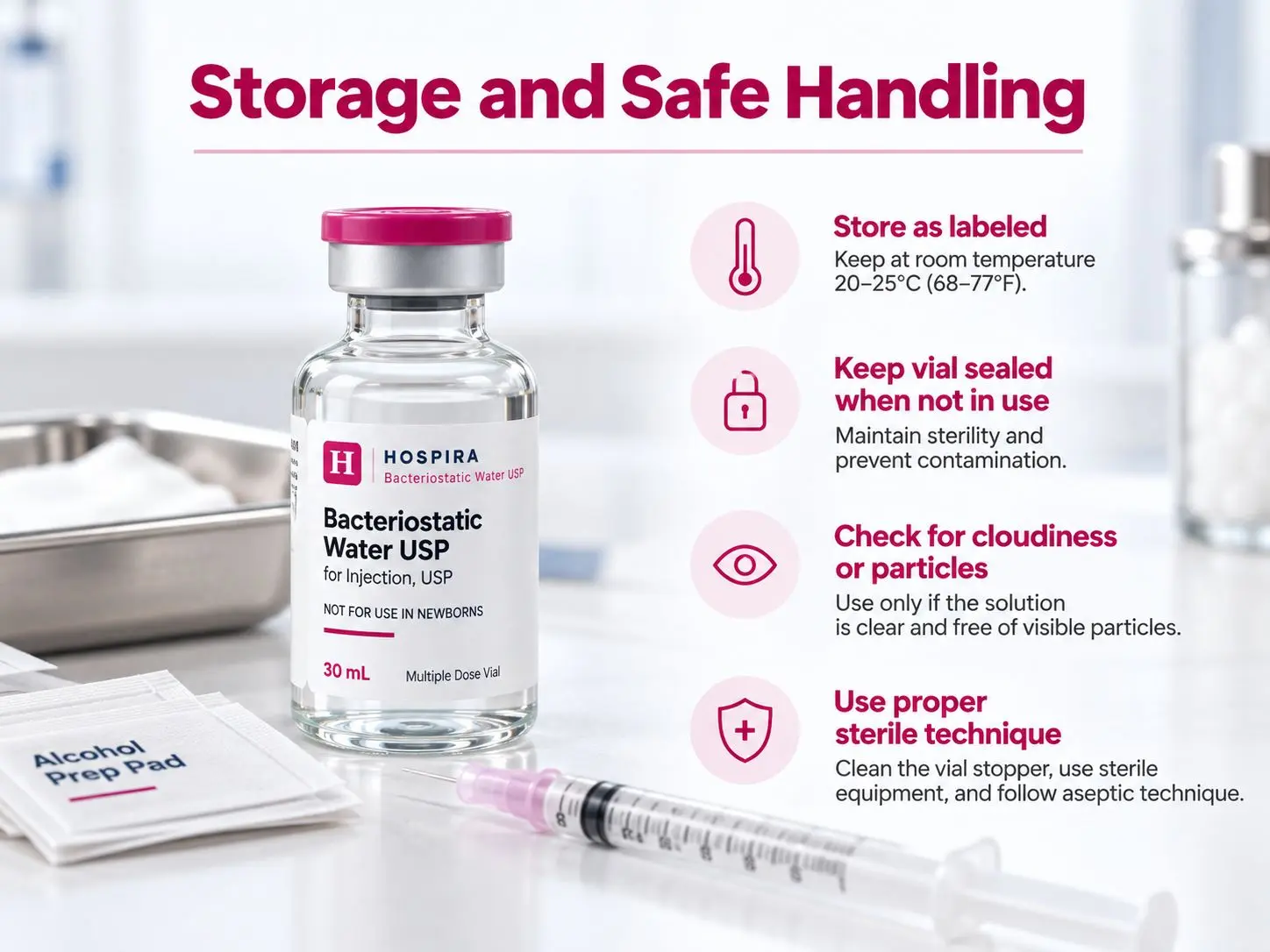
- Adhere to the directions for storage as outlined on the product label.
- Keep the vial properly sealed when not in use.
- Store bacteriostatic water according to the product label. Hospira labeling specifies storage at 20–25°C (68–77°F).
- Do not use any vial that appears to be cracked, leaking, or contaminated.
- Ensure the vial contents are clear of cloudiness or particles before use.
- Keep the vial in an appropriate storage location.
- Refer to the manufacturer’s instructions for further handling after the vial is opened for the first time.
Signs Bacteriostatic Water Should Not Be Used
Do not use the product if:
- The solution is turbid or cloudy.
- Visible particles are present in the solution.
- The solution is an unusual color.
- The vial, stopper, or seal is damaged.
- The packaging is leaking or cracked.
- The product is past its expiration date.
- The vial may have become contaminated during handling.
- There are improper storage conditions for the product.
- You are uncertain whether the vial is sterile.
How to Mix Bacteriostatic Water Safely
Step 1: Prepare a Clean Workspace
Before handling the vials, make sure you have:- Clean hands
- A clean workspace
- Appropriate sterile equipment
- Alcohol swabs
Step 2: Clean the Vial Stoppers
Clean the stoppers of the bacteriostatic water vials and the product vials with an alcohol swab. Ensure that the surfaces are dry before further manipulation.Step 3: Use Appropriate Sterile Equipment
Ensure that you use sterile equipment appropriate for the particular medicine to be reconstituted. Consult the manufacturer’s guidelines on the diluent and procedure.Step 4: Add the Bacteriostatic Water Carefully
Use the diluent as per the instructions in the specific product. Avoid any procedure that could cause contamination, foam formation, or harm to the solution.Step 5: Mix According to Product Instructions
In some cases, you may need to mix gently instead of shaking vigorously. Follow the manufacturer’s instructions, as handling procedures may differ between solutions.Step 6: Check the Final Solution
Check the solution before use for signs of contamination, such as a change in color or other changes. Use only uncontaminated solutions.How Much Bac Water for 30mg Retatrutide?
A frequent query is, “What quantity of bacteriostatic water is needed for 30 mg of retatrutide?” The answer depends on the required concentration and the procedure used. Nevertheless, retatrutide is a medicine under investigation, and no dilution instructions are recommended for a 30 mg vial.
Some of the factors that can influence preparation are:
- Desired concentration
- Injection volume
- Accuracy of measurement
- Product composition
- Manufacturer’s recommendation
- Healthcare professional advice
Important: To ensure safety, do not apply a general dilution ratio to retatrutide. Retatrutide is an investigational drug and is not an FDA-approved medication. [FDA]
Understanding Concentration Calculations
Concentration calculations show how much compound is present in a specific volume of liquid. The general formula is:
Concentration = Total compound amount ÷ Total liquid volume
For example, if a hypothetical 30 mg compound were combined with 3 mL of liquid, the concentration would be 10 mg/mL. This is a mathematical example only and is not a recommended preparation method for retatrutide.
Is Bacteriostatic Water Safe?
Bacteriostatic Water for Injection is intended for use as a diluent when its labeling and the instructions for the injectable product permit it. However, it is not appropriate for every injectable product or every patient. Bacteriostatic water contains benzyl alcohol as a preservative, but the preservative does not replace proper aseptic handling or eliminate the risk of contamination.
For example, the Hospira label warns against use in neonates because of the benzyl alcohol preservative. Always follow the specific product labeling and healthcare professional guidance when determining whether bacteriostatic water is appropriate.
Frequently Asked Questions
Here are some frequently asked questions about bacteriostatic water, its uses, storage, safety, and common considerations.
Does bacteriostatic water contain benzyl alcohol?
Yes. Bacteriostatic Water for Injection contains benzyl alcohol as a bacteriostatic preservative. The concentration depends on the specific product; the current Hospira labeling lists products containing 0.9% or 1.1% benzyl alcohol.
What is the difference between bacteriostatic water and sterile water?
Does bacteriostatic water expire?
Can bacteriostatic water be used for peptides?
How should bacteriostatic water be stored?
Store it according to the manufacturer’s instructions. Keep the vial properly sealed and protect it from unsuitable temperatures, contamination, and direct light.
Conclusion
Bacteriostatic water is used to dilute some of the injectable drugs and other drugs. The preservative ensures that bacteria do not grow after the opening of the vial. However, sterile handling is still of great significance. Bacteriostatic water does not work with all products and peptides. If you are looking for bacteriostatic water for a labeled medical use, you can buy Bac Water from Hospira Bacteriostatic Water.
All Vial Sizes
Facts About Hospira Bac Water
- Hospira, Inc. (a Pfizer company)
- Benzyl Alcohol 0.9% (9 mg/mL)
- 30 mL multiple-dose vial
- Store at Controlled Room Temperature
Related Blogs
Related Blogs
We are providing every type of guides for Hospira Bac Water usage.